worksecure.be
EN

Knowledge platform for safety, health and sustainability at work
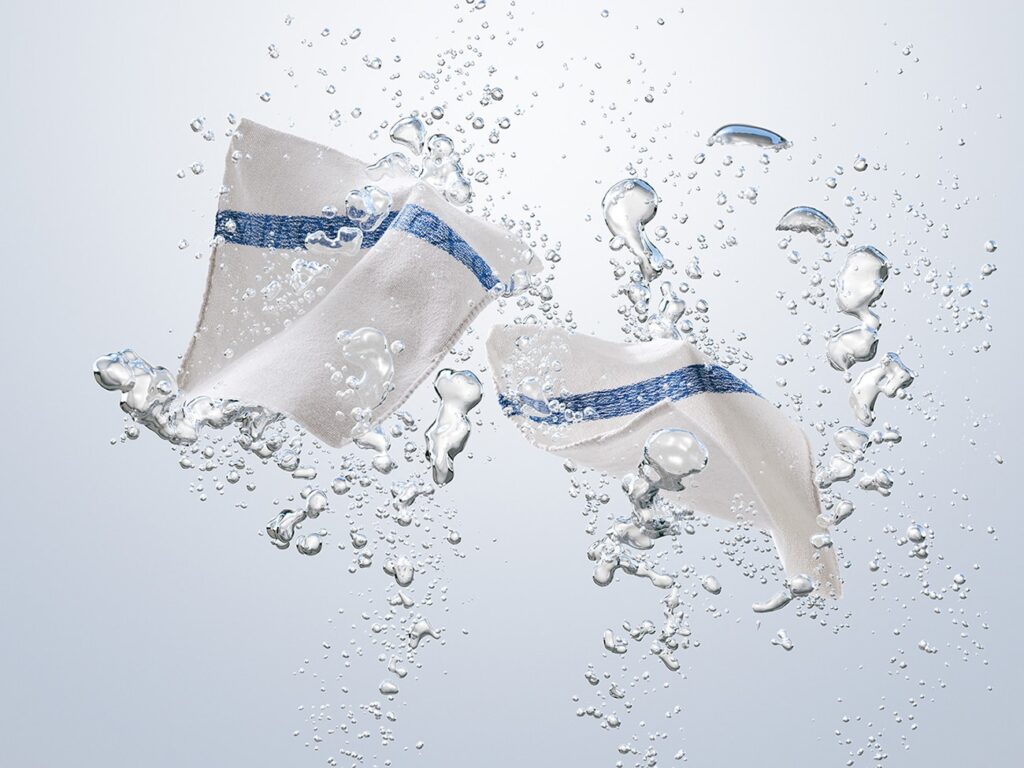
Textile service provider Mewa presents its new brand identity: designed from tradition, at the same time modern and future-oriented. The new corporate identity was developed by Munich-based Martin et Karczinski. The agency for brand strategy, design and transformation specialises in translating identity into the operating dimensions: content, form and attitude.
Mewa Group, the third-largest textile service provider in Europe, has developed strongly internationally in recent years due to its market and customer growth. As a pioneer of circular economy and reuse of company textiles, the company chooses the term ‘Textile Sharing’ for increased visibility and brand awareness. Together with Munich-based Martin et Karczinski, which specialises in holistic brand management, corporate design and transformation, the corporate identity was developed from the self-image as a value-oriented, traditionally innovative family company. All visible brand elements such as the logo, font, colour scheme and imagery were completely revised and aligned with the values, vision and mission that form Mewa's identity.
‘The world we work in is constantly changing, and we are changing with it. At some point it became clear: not only is our branding strategy evolving, our image has to evolve with it to be future-proof,’ says Michael Kümpfel, Marketing & Sales Director at Mewa. The group can look back on more than a hundred years of family history. The brand strategy also means that Mewa will no longer remain a ‘hidden champion’, but will become a visible and self-confident brand that seeks publicity. Michael Kümpfel: ‘Of course we are proud of our roots, but we have been successful over the past hundred years because we always question ourselves and think ahead: what is new, where is the potential, what do markets and customers need, what will the working world of tomorrow look like? We also want to tell that in our brand story.’

Peter Martin, founder and CEO of Martin et Karczinski says of Mewa's new look: ‘At its best, form is an expression of the valuable core of a brand. Here, we managed to connect Mewa's history with the future and make its own identity visible in the design.’
Martin et Karczinski was given a very specific brief by the company management for the new image: the aim of the revamp was to create a brand that retains its essence, but also symbolises growth while expressing Mewa's environmentally conscious service offering. ‘We did not want to radically reinvent the Mewa brand, but to develop it in an evolutionary way so that the tradition and successful history remained visible. At the same time, it was also important to make Mewa's future orientation and sustainable ambitions clear in the design as well,’ says Simon Maier-Rahmer, creative director of Martin et Karczinski, who developed the new image together with his team.
The brand's logo - the flower - represents values such as purity and hygiene, the environment and sustainability, and symbolises development, growth, evolution and innovation. To unleash this potential, the logo was revised and formally reduced to its essence. Stylish and powerful, the new flower becomes a symbol of conscious growth. Mewa's new lettering is reminiscent of crossed threads: the letters ‘M’ and ‘W’, thanks to their alignment, resemble weaving threads, providing a connection to the textiles that made the company great and still characterise it today. Mewa also said goodbye to capital letters and opted for mixed typography. ‘The capital letters stood for the abbreviation of the name our founder Hermann Gebauer gave the company in 1908: Mechanische Weberei Altstadt,’ explains Oliver Gerrits, Head of Marketing & Communications. ‘Today, we have 46 international branches and can proudly consider ‘Mewa’ a brand, and no longer just an abbreviation.’ The new sans serif house font was developed exclusively for Mewa in collaboration with typemates. Here too, the company has stayed true to itself, combining innovation and tradition: the typeface is modern, clear and precise, the name connecting it to its roots. The new Mewa typeface is called ‘Gebauer’, like the name of the founding family.
Mewa currently operates in 21 European countries, employs 5,700 people and serves more than 190,000 corporate customers. The B2B service provider stands for sustainable textile solutions for companies and is one of the market leaders in textile management. More than a million employees in Europe wear professional, protective or business clothing from Mewa, almost 3 million people choose a Mewa product every day to keep machines in production halls and workshops clean. Those who call on Mewa's services can expect reliability, security and transparency.
Mewa has been offering a total solution for industrial clothing since 1908 and is thus considered a pioneer in textile sharing. Today, from 46 branches, Mewa supplies companies all over Europe with professional clothing, protective clothing, cleaning cloths, oil sumps and foot mats - including maintenance, repair, storage, logistics. In addition, items for occupational safety can now also be ordered. Some 5,700 employees are ready to serve more than 190,000 customers from industry, trade, crafts and gastronomy. In 2021, Mewa achieved a turnover of EUR 770.4 million and can thus call itself the market leader in the textile management sector. For its commitment to sustainability and corporate responsibility, and for its brand management, the company received several awards.
Martin et Karczinski
Martin et Karczinski is a holistic strategy, design and transformation company founded by Peter Martin and Daniel Karczinski in Munich in 2000. It combines brand strategy with high design standards and sees identity as the most effective tool for value-based, prescriptive business management.
In his unique be.yond method, Martin et Karczinski combines content, form and attitude to create maximum impact for the company and the brand. Martin et Karczinski aims to resolve the conflict between economic growth and sustainable action and contribute to a new awareness in business. Martin et Karczinski thus positions itself as a facilitator of ‘Conscious Growth’, conscious growth. The owner-managed company employs around 100 experts in consulting, strategy, design, organisational development and communication at its offices in Munich and Zurich.