worksecure.be
EN

Knowledge platform for safety, health and sustainability at work
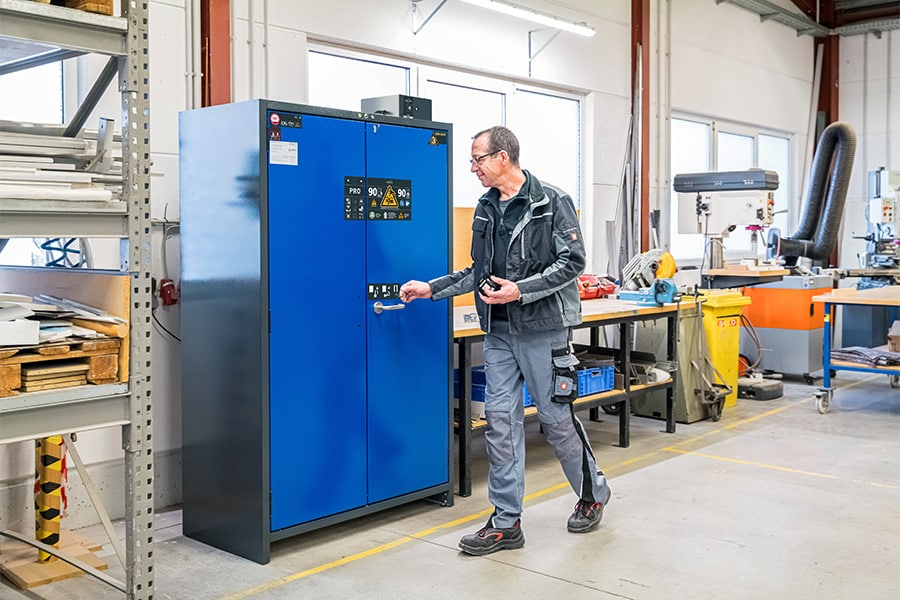
The smell of hazardous fumes in your warehouse can not only cause discomfort, but also constitutes an important warning. These fumes can lead to health damage and pose fire and explosion hazards. “As soon as you smell something when opening the storage cabinet, it is important to investigate what substance it is and what effect it may have on health and safety,” advises Henk Niewenhuis. He is managing director of Asecos, a company with vast expertise as a market leader in safe storage solutions for hazardous substances. With innovative safety cabinets, ventilation equipment and air cleaners, Asecos helps contribute to a safe working environment.
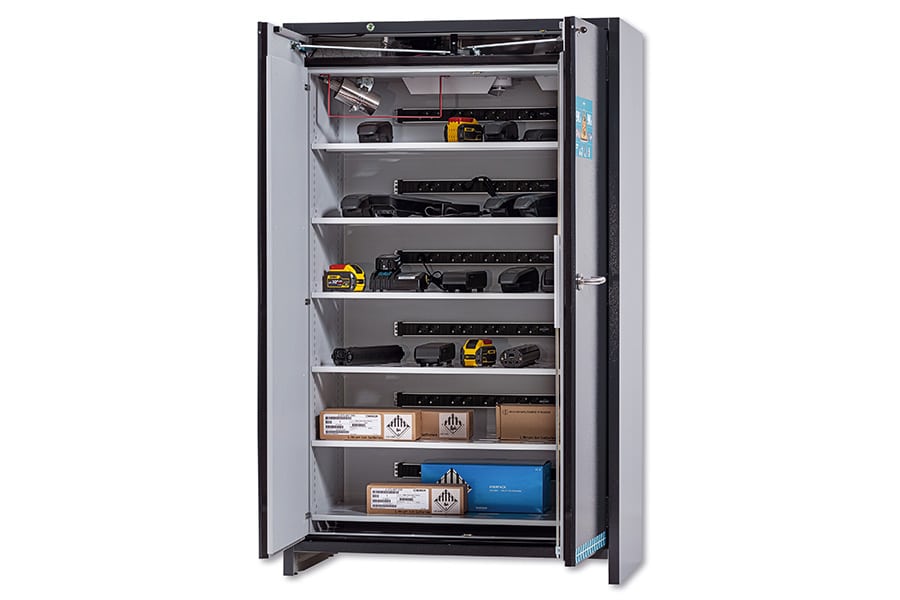
Flammable liquids including petrol, turpentine and alcohol, as well as acids, bases and toxic substances, can give off dangerous vapours. Capturing these vapours is essential once opened packaging is present in a cabinet. “When the primary packaging is not opened, no diffusion can take place,” Niewenhuis explains. “But as soon as you smell something, that is a clear signal to find out what substance is involved and how to protect staff and the environment. Even low concentrations can have serious effects. Various values have been set from the occupational health and safety authorities for this.”
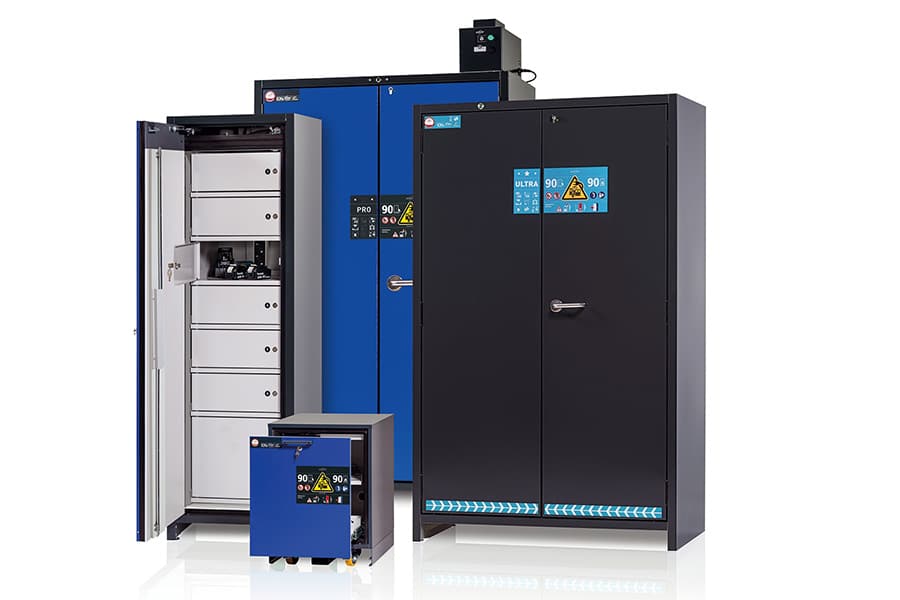
When choosing the right extraction solution, the existing infrastructure, among other things, plays a role. “If a structural system is already in place, the ventilation unit can be connected to it. If not, we look at whether the air can be extracted directly to the outside,” says Niewenhuis. “If the box is against an outside wall, you can use a short tube to discharge the air to the outside. With a natural draft, there is then already sufficient extraction. If this is not the case, a ventilation unit needs to be placed in between. Here, we look at how many cubic metres of air need to be extracted and there is a rule for this; if you are talking about highly flammable substances, at least a tenfold change rate must be applied. For toxic fumes, it is even a 120-fold change rate. We supply different models of ventilation units, each with a different degree of refreshment.”
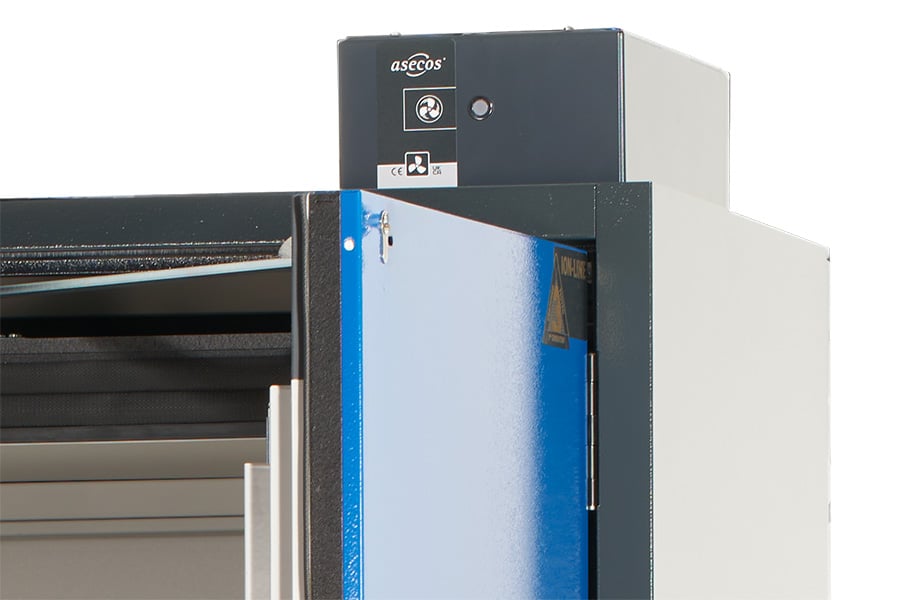
Sometimes, however, chopping and breaking is undesirable. For example, because of a listed building or for financial reasons. Then the recirculation filter unit can be a solution. This extracts the air from the cabinet, filters it and returns it purified to the room. Another advantage of this type of extraction is that the working environment does not lose heat or coolness to the outside air, allowing for more energy-efficient ventilation.
The recirculation filter attachment unit UFA.025.030 from Asecos offers many innovations that provide even more safety when ventilating fire safety storage cabinets. “It features a colour display with a signalling system to indicate filter saturation, operating states or error messages. For filter saturation, we have built in an extra step. A green light already starts flashing at seventy per cent saturation, letting the user know that it is still purifying sufficiently, but the filter will have to be replaced in the foreseeable future. And at ninety per cent saturation, the light turns red and replacement is really necessary.”
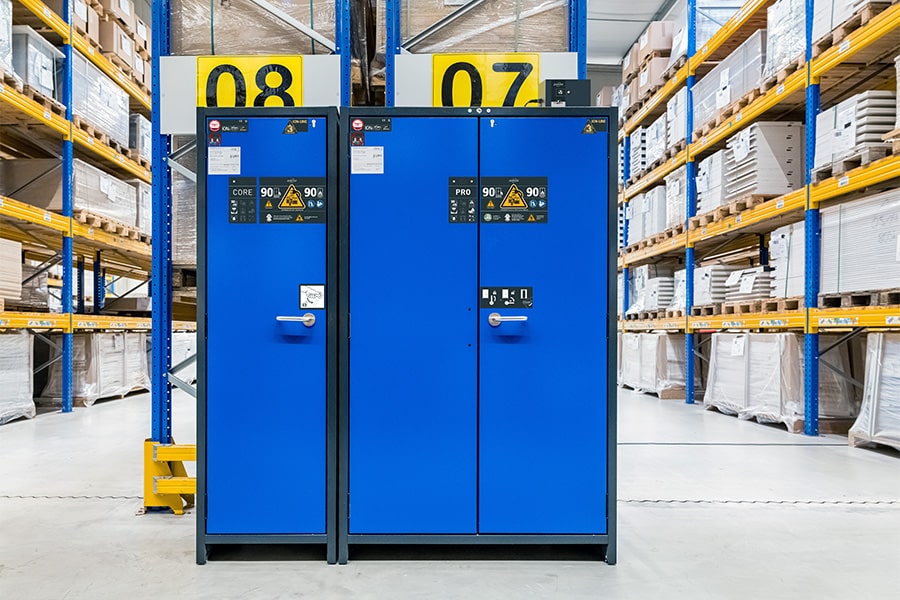
Asecos offers additional security with the Safety Assistance System option, which can already be installed in the fire safety storage cabinet at the factory. Niewenhuis: “This flow monitor constantly monitors the air flow. As soon as the ventilation is not working optimally, it issues a warning via a red light. In other words, a visual warning for the employee about to open the cabinet. An extra layer of safety that ensures employees remain constantly alert and helps further minimise risks in the working environment.”