worksecure.be
EN

Knowledge platform for safety, health and sustainability at work
The use of lithium-ion batteries has increased dramatically in recent years. However, these batteries can ignite by themselves. Besides fire and explosion hazards, they can also release toxic smoke, which in large quantities can even be lethal. Warehouses are full of items containing such batteries. How can you best protect your staff and business, and what about regulations and insurers?
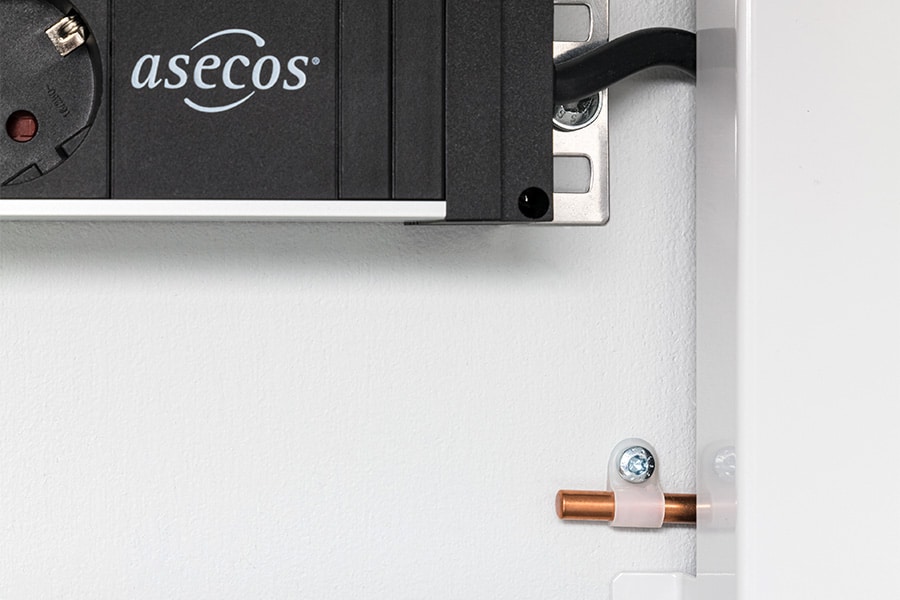
We asked Henk Niewenhuis, managing director of Asecos. After all, as a market leader in safe storage solutions for hazardous materials, the company has a huge amount of expertise. And thanks to their pioneering spirit, they started thinking about the safest storage of lithium-ion energy carriers a decade ago. Niewenhuis: “The positive and negative poles of these batteries are separated by a separator. If there is a break in this separator, it can ignite by itself. However, as a user it is impossible to tell whether such a break is present, for instance due to poor quality or a fall. Moreover, charging such a battery, which is often done unattended at night, increases the risk of ignition.’
“Warehouses are full of goods containing lithium-ion batteries. Think phones, laptops, electric bikes and toys. But also scanning equipment for order picking. Also, don't forget the storage of used or returned items, where you certainly don't know what happened to the battery. It is important to think carefully about the safety of these energy carriers that can spontaneously ignite.”
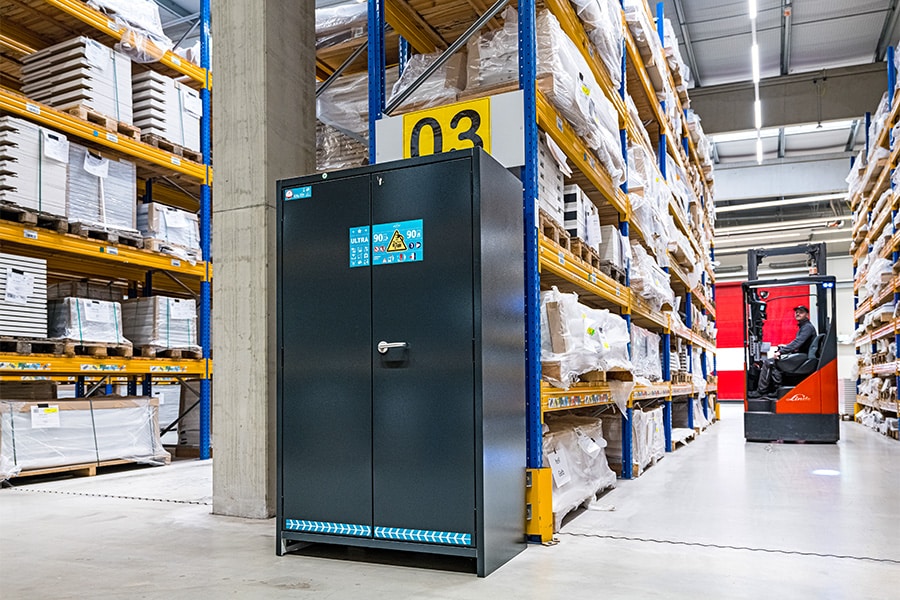
Companies that want to safely store and/or charge their lithium-ion energy carriers in a fireproof cabinet would do well to seek information from reliable organisations with sufficient expertise, according to Niewenhuis. “There is still a lot of ambiguity about the regulations and there are many manufacturers who still lack knowledge. The only certainty for you as a user is to ask for certificates, such as the European EN 1447-1, which will help you separate the wheat from the chaff. In addition, also ask the insurer if they have any requirements.” To gain more insight, you can also use useful tools, such as the configurator on Asecos' website.
Recently, there has been some clarity on the safe storage of lithium-ion batteries thanks to the new PGS 37 regulations. “Moreover, last year the German VDMA 24994 directive came into force, which some insurers are already referring to. It has also been filed from Germany that there should be a European standard based on this VDMA directive. As a matter of fact, we consider this directive incomplete and have gone a long way with our cabinets. Anyway, this European standard will take some time, but in the meantime, there is a good chance that insurers will impose higher requirements.”
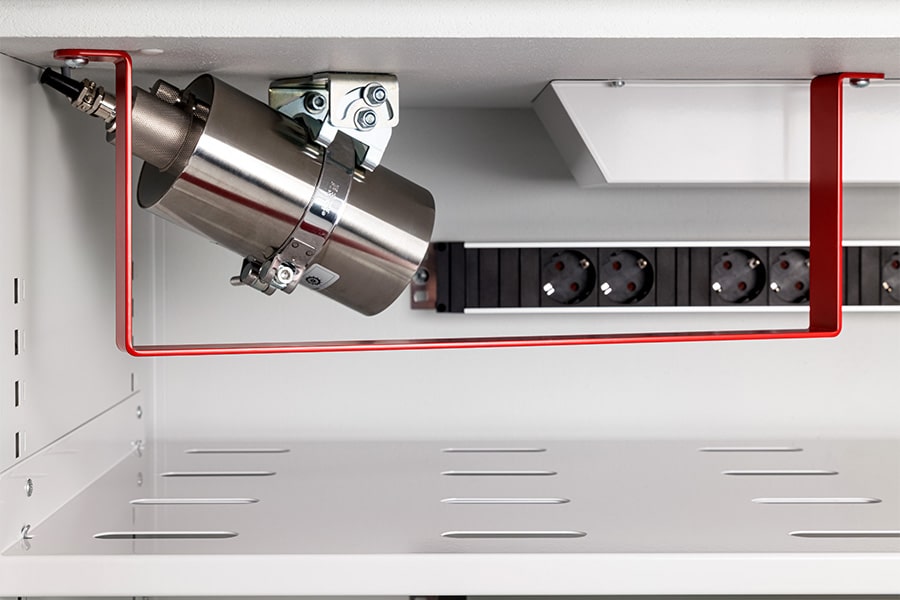
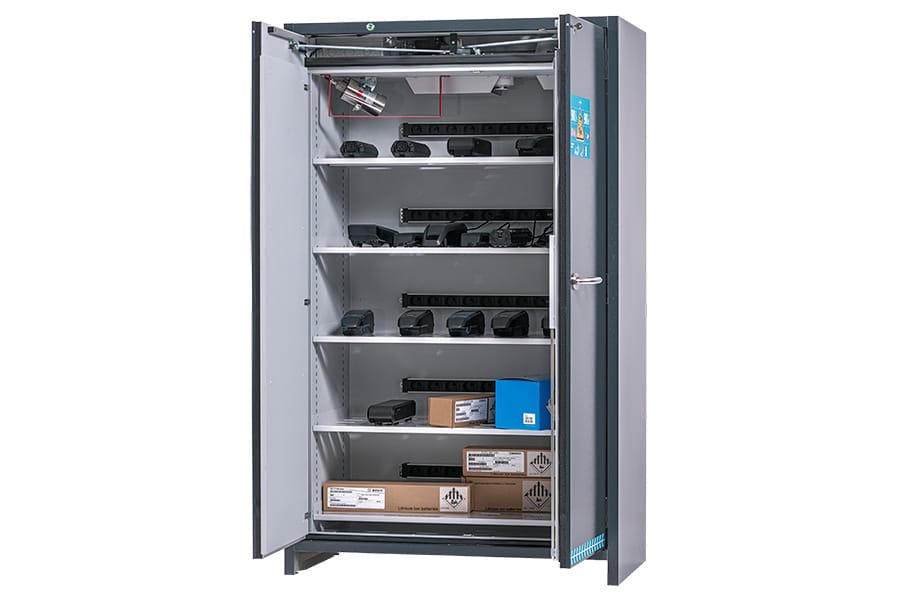
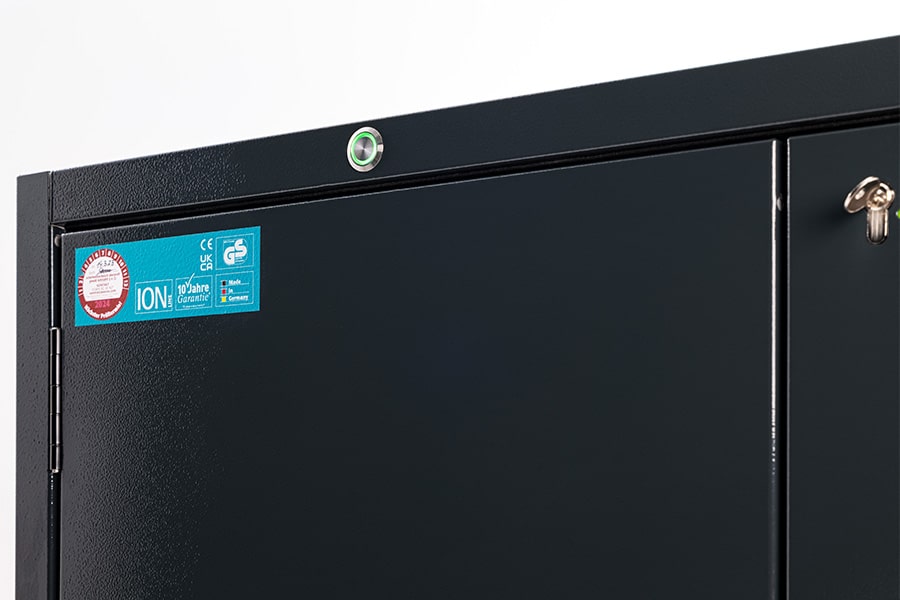
Because Asecos started developing fire-resistant cabinets for storing and/or charging lithium-ion batteries at an early stage, their products are already fully compliant with the new PGS 37 directive. “Our cabinets already met the EN-14470-1 standard, which stipulates, among other things, that fire resistance from outside to inside must be at least 90 minutes. But since a lithium-ion battery produces its own oxygen, we also created this fire resistance from inside to outside.” Asecos went the extra mile by fitting its lithium-ion cabinets with alarm detection and making them smoke-proof and explosion-proof. In addition, Asecos is the only manufacturer whose cabinet is EK5/AK4 22-01 certified in accordance with the GS principle.
The huge lead taken by Asecos not only makes their cabinets the most fire-safe, it also gives customers the assurance of making a good investment with an eye on future requirements and legislation.